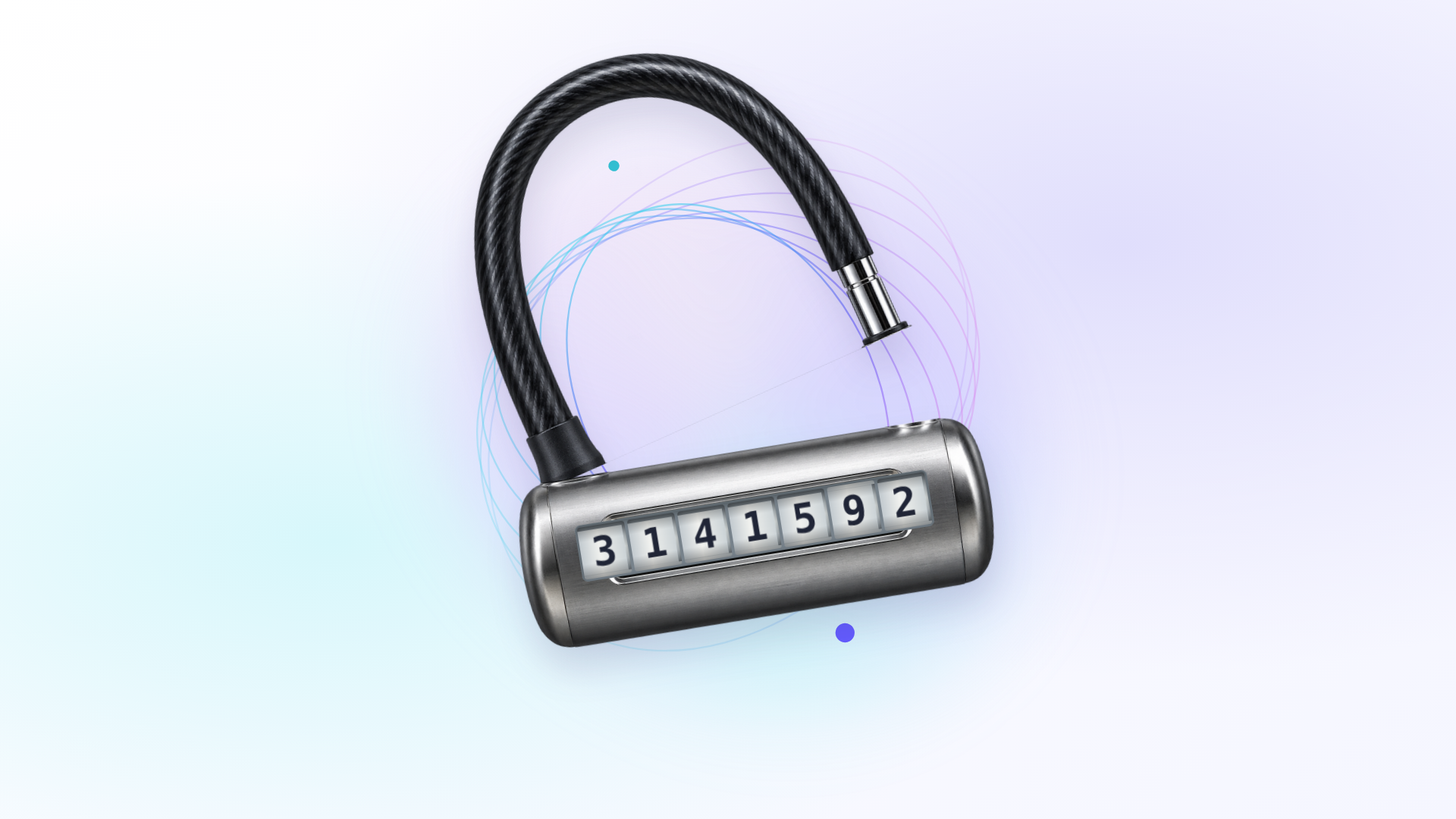
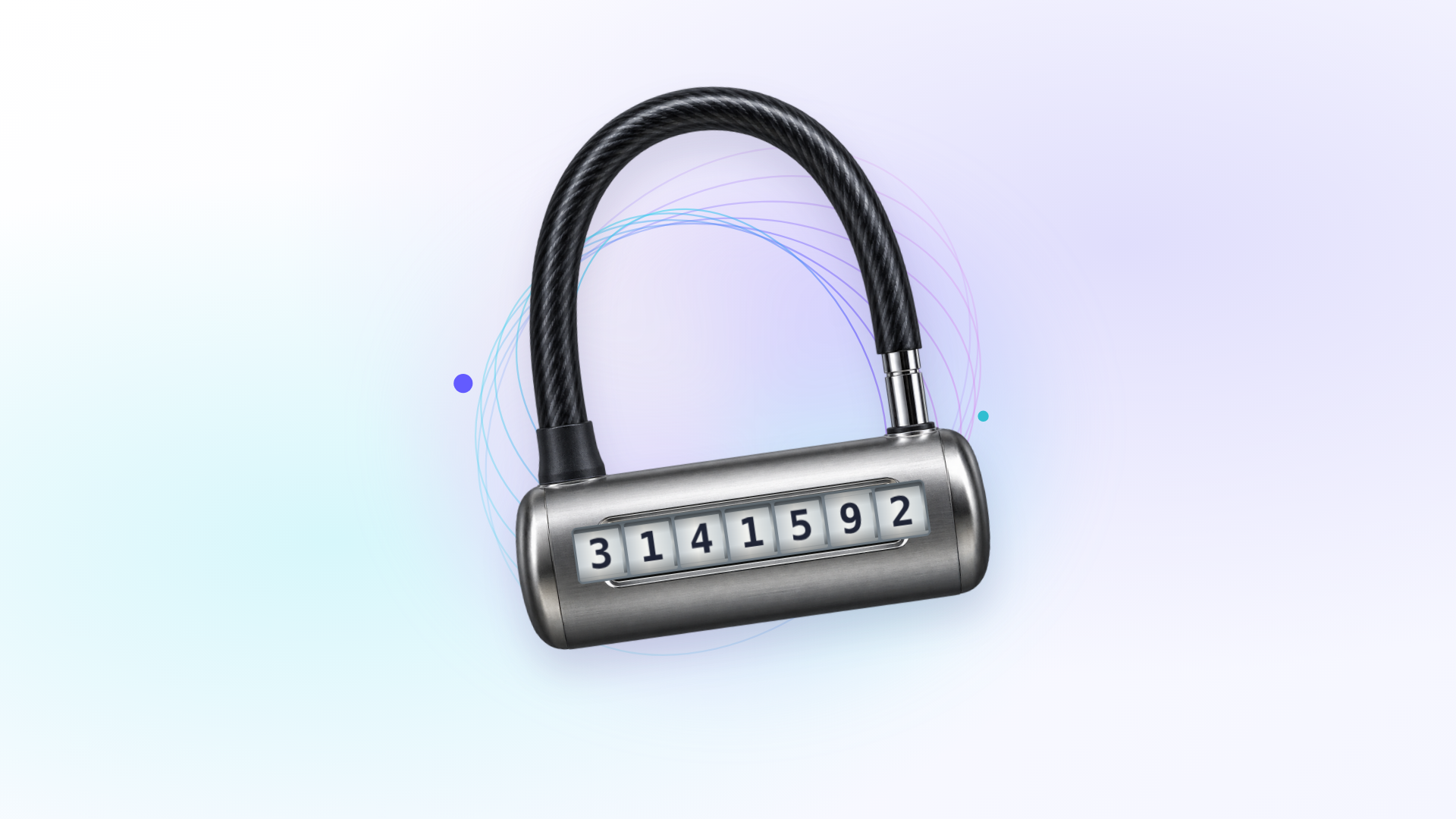
A combination lock brings quantum search into view.
Seven number wheels. Ten million possible codes. Qubitwerk lets you try a quantum algorithm on an ordinary PC. Across eight documented test runs, the median measured simulator computation time was around three seconds.
The animation shows how the lock experiment works. Start the experiment on qubitwerk.com to have our simulator compute it on our PC.
The documented facts
7digits in the test code
10 millionvalid combinations
≈ 3 ssimulator computation · median
Measured on 17 September 2026 on our computer. These figures apply to the prepared search problem, not to arbitrary quantum circuits.
Measurement conditions & source
Intel Core i9-10900K with NVIDIA GeForce RTX 3090. The seven-digit simulation ran on the GPU, with verification on the i9. Double precision.
Eight integration test runs: median 2.9289 s, range 2.9052–2.9914 s. Includes process startup, state verification, 2,048 samples, GPU startup and return transfer. Excludes queueing, network and animation.
Set a seven-digit test code on the virtual lock, then scramble the number wheels. When you start the experiment, Qubitwerk simulates a quantum search algorithm. It changes the calculated probabilities so that a subsequent measurement returns the target code with high probability. The wheels stop and the virtual lock opens.
Computed on an ordinary PC
Coolblack develops the simulator on an Intel Core i9 with an NVIDIA RTX 3090. Across eight documented integration test runs for the seven-digit lock, the median measured simulator computation time was 2.9289 seconds. Starting the experiment on the website runs a simulator computation on our PC. For this press clip, we have illustrated the sequence with a lock animation.
An experiment for understanding
The checking rule knows the test code you set. The experiment illustrates the mathematics of quantum search. It does not crack unknown passwords or establish a speed advantage over classical search programs. For this simple task, a classical search loop is faster than the simulation. These measurements do not establish the runtime of a physical quantum computer either.
Our goal: Making the impossible possible.
We want to advance quantum simulation on ordinary hardware and make it accessible to more people. In parallel, we are researching our own approach to affordable quantum hardware. We are developing the simulator as a virtual test environment: we want to investigate models before building hardware and later compare expected results with measurements from our own hardware. The technical details of this early research remain confidential.
No headlines, logo or timing overlays. Only the lock, number wheels and light effects. The sound version uses original synthesized music and mechanical effects, with no narration.
MP4 · H.264 · 24 fps · 20 seconds. Both languages use the same text-free files.